By Moana Ellis, Local Democracy Reporting
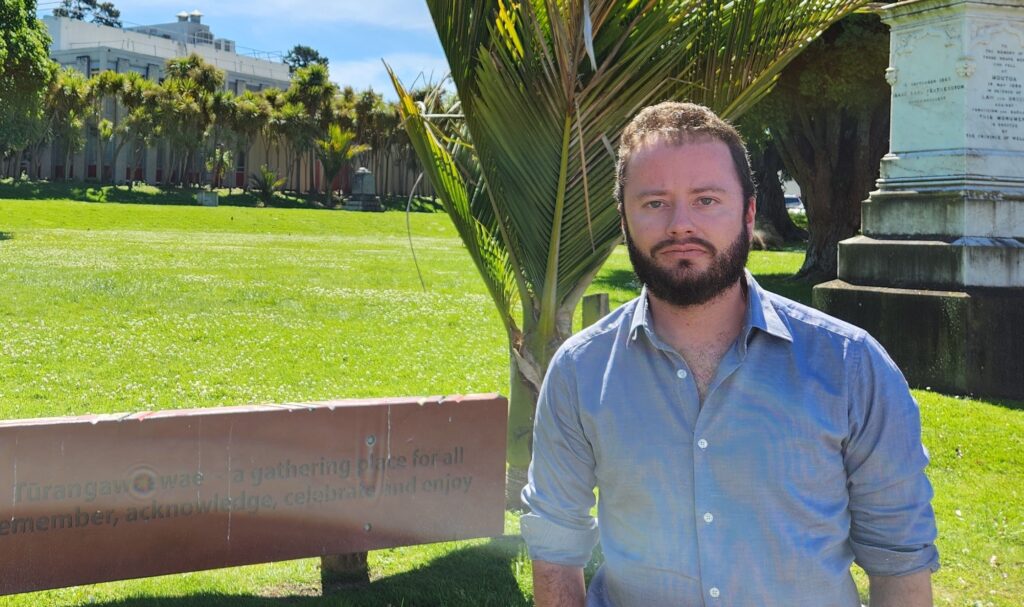
A Whanganui district councillor says he is concerned about the breadth of powers police will have under the Government’s proposed move-on orders.
Councillor Josh Chandulal-Mackay says the new law would give police sweeping powers over homeless people that go far beyond disorderly behaviour.
“It doesn’t simply relate to disorderly behaviour, but ‘all forms of begging’, ‘rough sleeping’, and ‘behaviour indicating an intent to inhabit a public place’.
“This move by the Government, which defines homeless residents as nuisances that need to be shuffled out of sight, falls well short of the standards of decency that Whanganui aims for,” he said.
The fourth-term councillor said the policy direction “deeply concerns” him.
“It appears to have stemmed from concerns relating to homeless people seeking refuge in the Auckland CBD, but the response is being applied right across New Zealand through a law change,” he said.
The crackdown on the homeless would not address the root causes of homelessness, he told Awa FM.
“The law change is framed as necessary to make our CBDs ‘attractive’ and to increase the positive experiences of tourists coming to New Zealand.
“This law isn’t designed to address homelessness, it’s designed to shift a problem whilst carrying the appearance of a solution.
“It will grow social fragmentation.”
On Sunday, the Government proposed new powers for police to move on rough sleepers or people displaying disorderly behaviour in town and city centres.
Breaching an order, which requires someone to leave an area for up to 24 hours, risks a fine of up to $2000 or a three-month jail term. Police Minister Mark Mitchell said the move-on orders would provide police with additional enforcement powers to ensure public safety.
Announcing the plan, Justice Minister Paul Goldsmith said city centres and “showcase tourist spots” were becoming places of intimidation and dysfunction.
“Our main streets and town centres have been blighted by disruption and disturbance. Businesses are declining as some bad behaviour goes unchecked. It needs to stop.”
Chandulal-Mackay said Whanganui prided itself on being a “compassionate and welcoming community” that supported residents without secure housing.
He pointed to the “enormous” number of frontline non-government agencies in the city, including the Whanganui City Mission, The Koha Shed and The People’s Centre, many of which received council contracts or grant funding to work with people living rough and try to connect them with housing support.
“The proposed law change does not address the welfare of homeless residents, it just shuffles them out of sight,” he said.
“[It] prioritises aesthetics and CBD experience over the well-being of the most vulnerable members of our community.”
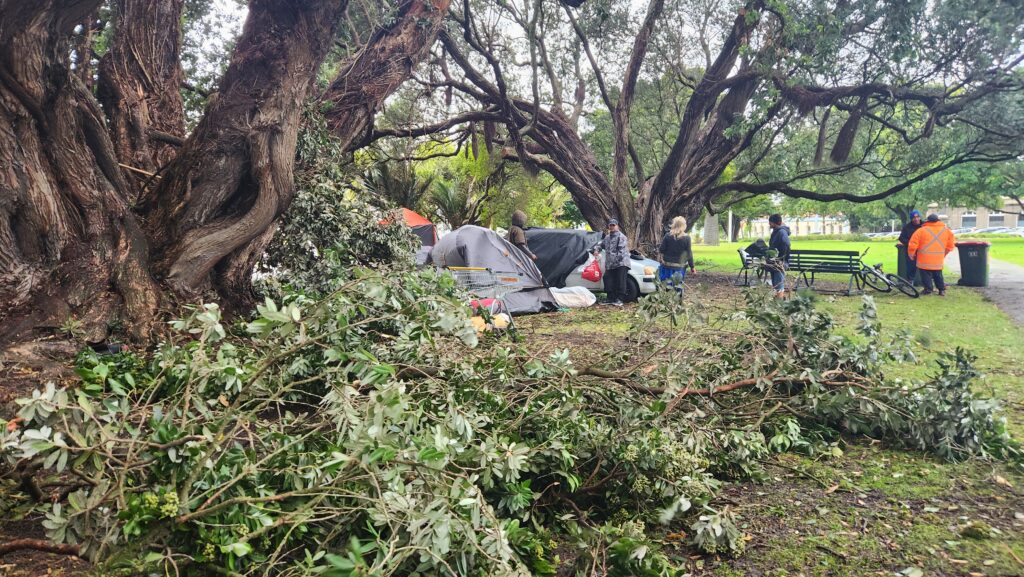
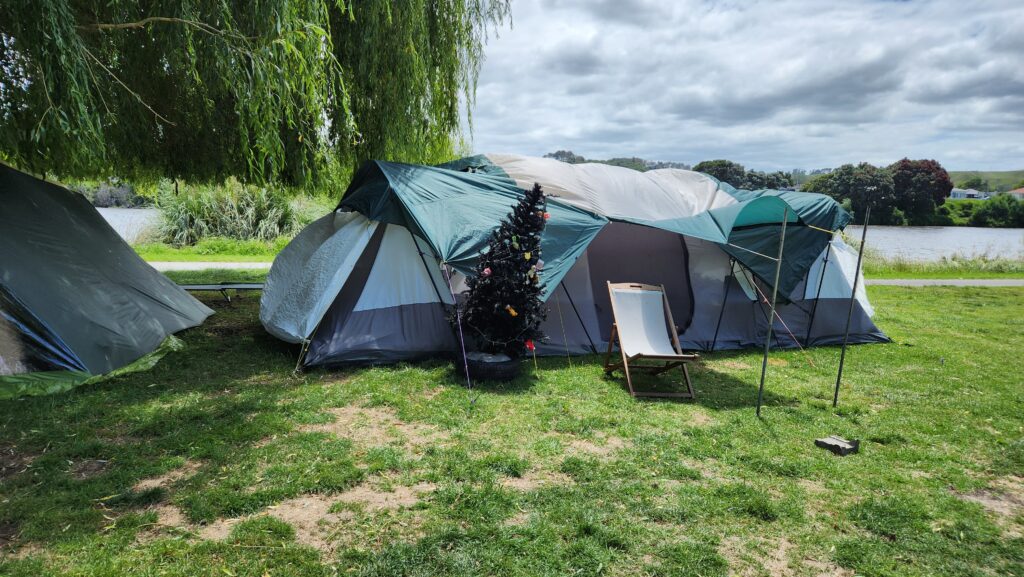
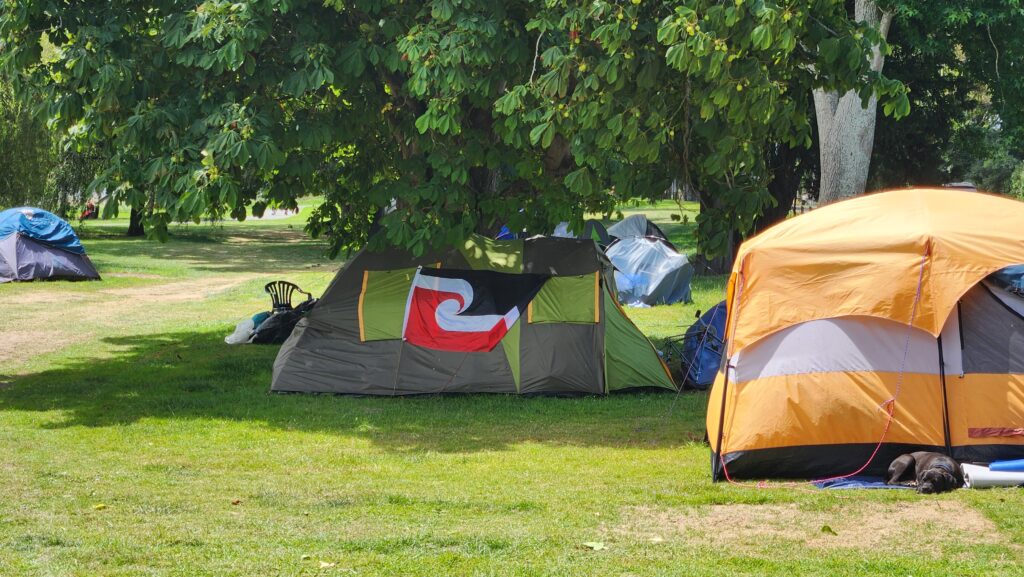
Homelessness in Whanganui has been a long-standing issue, with people living rough in tents, vehicles and informal camps in public spaces and freedom camping areas.
A freedom camping site on Anzac Parade, on the bank of the Whanganui River, became a long-term de facto encampment for the homeless.
After residents complained of anti-social behaviour and safety risks, the council designated another riverside freedom camping site as a “homelessness hub”. The camp at Taupō Quay, close to the CBD, was to offer toilets and showers, security and support services.
In 2024, the council closed both the Taupō Quay homelessness camp and the Anzac Parade freedom camping spot. Just before Christmas, about 15 people living at the Anzac Parade site were given two days to clear out their tents, vehicles and belongings.
The council said the closures were necessary because of health and safety risks, and said the riverside area needed to be safe and family friendly.
Earlier this month, the council closed a “dangerous and insanitary” heritage building at 28 Maria Place in the CBD, citing safety and compliance issues. Fourteen people were given 24 hours to vacate the building.
Social agencies, including Whanganui People’s Centre and the Ministry of Social Development, were contacted to help residents find new accommodation.
Some moved into tents on historic reserve Pākaitore, and sheltered there under trees and canvas and in cars during the storm and state of local emergency declared on February 15.
A group of people are still sheltering there with support from Tūpoho Social Services and The Koha Shed.
The council has said it would work with community and social service agencies to help people into housing. It funds advocacy services through Whanganui People’s Centre.
Chandulal-Mackay said he was unaware of any pre-consultation on the move-on orders with the council or local service providers.
The city had an ongoing housing shortage, he said.
“Council is trying to address the issue through increasing the standard of our older persons’ housing and setting up a new housing entity to build 1000 additional houses over a 10-year period.”
Chandulal-Mackay said recent Government decisions had compounded local pressures.
Last year, 138 new Whanganui homes planned by Kāinga Ora were reduced to seven, while frontline organisations like the City Mission were struggling to meet demand.
He warned that a proposed rates cap would further restrict the council’s ability to respond to social challenges.
“If Government won’t address the needs of the socially marginalised, if frontline organisations are struggling to meet demand, and if councils are restricted from responding locally through rates-capping, then who steps in to offer a hand up?”
Awa FM – Te Reo Irirangi o Whanganui
For more of our people, our stories, our way, click News or follow us on Facebook.