
The tide of education is shifting for Whanganui youth as they explore the vast potential of technology at the Whanganui Rangatahi Tech Expo.
One of the most significant themes to emerge is technology’s power to breathe new life into ancient stories.
For Raukura Maru-Patea, a student at Te Kura O Kokohuia, technology is the key to unlocking historical discourse.
“To me, we are able to pursue stories from the past and historical words through technological work,” she says.
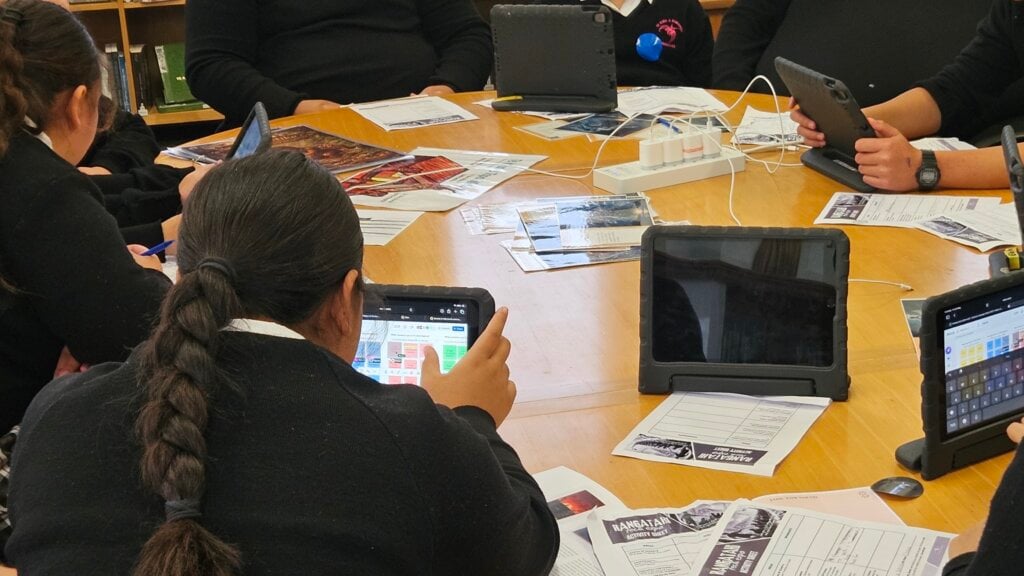
She regularly utilizes iPads and computers to research her school assignments and is looking toward a future involving university and career stability.
Supporting the students is Vanessa Edwards-Buerger, a kaiako from Te Whare O Rehua.
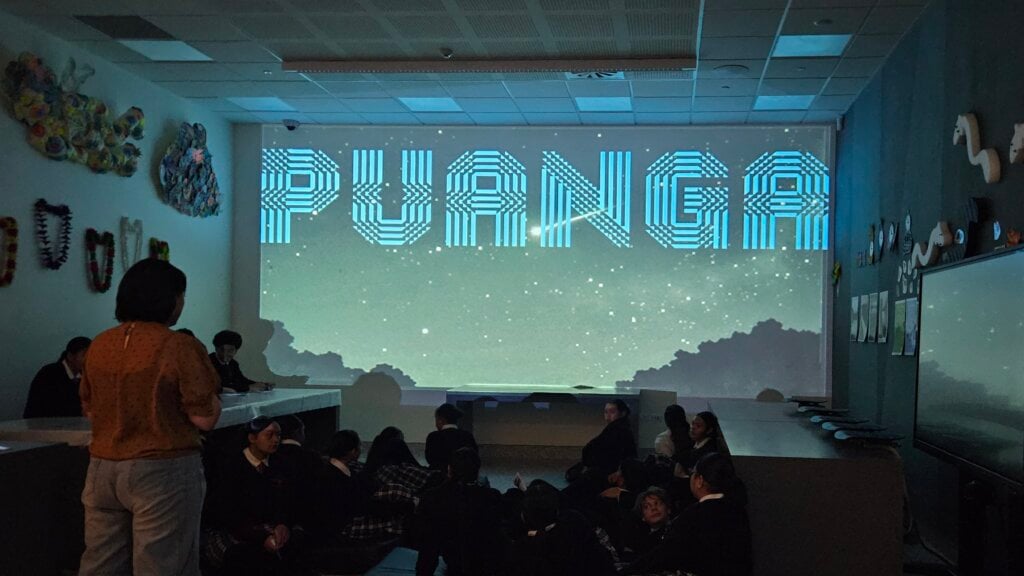
She designed a workshop focused on Puanga at the expo, demonstrating how visual technology can be used to project and animate Māori narratives.
“We’re trying to utilise different technology to bring our narratives to life,” Edwards-Buerger explains.
Despite the rapid rise of new developments like Artificial Intelligence (AI), she maintains strong faith in the Māori ability to learn and adapt.
“Find a place for AI, explore it, get to know it, and then we need to create tīkanga around how we utilise AI.”
The overarching goal is for these rangatahi to stand tall, using these technological platforms as a vehicle for academic success while remaining firmly rooted in their Māori identity.
While students see technology as a foundation for their academic and financial futures, some kaiako admit to a more cautious approach.
Edwards-Buerger acknowledges the necessity of “making a place” for AI because of its inevitability, but stresses the urgent need to “create tīkanga around how we utilise AI”.
Despite personal reservations, Edwards-Buerger maintains that Māori are “very good at learning and adapting” to new developments.
The exploration of AI coincides with significant national shifts. The New Zealand government recently announced public service reforms projected to save $2.4 billion over four years, largely through a 14% reduction in the workforce and the central use of AI to drive productivity gains.
However, Minister Paul Goldsmith has noted a lack of local AI providers at the scale of international models like Claude or Copilot.
This has led critics to warn that replacing human oversight with overseas AI vendors could result in hidden recurring costs – such as licensing, integration, and error remediation – that may ultimately erode the projected fiscal savings.
For Māori practitioners, this highlights a critical need for transparent cost and risk estimates that account for both economic impacts and the sovereignty of cultural data.