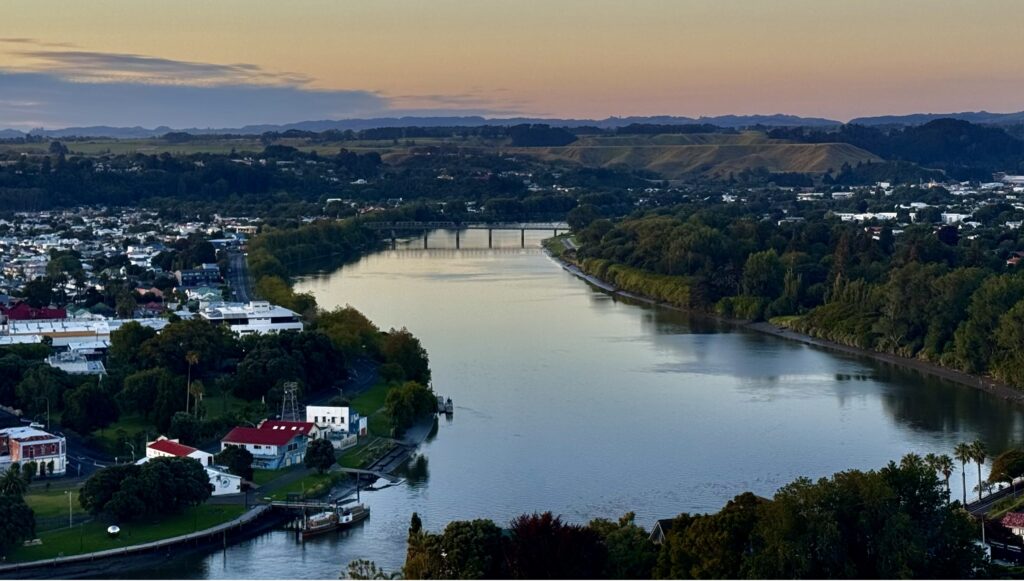
By Moana Ellis, Local Democracy Reporting
Whanganui District Council has moved to correct false information circulating online after a fabricated “media release” about the Dublin Street Bridge gained traction on social media.
The post, which claimed the bridge was about to become one-way and subject to daily closures, did not come from the council.
It was shared from a Facebook page titled “War Memorial Hall, Wanganui”, which appeared to pose as a major community venue.
Published under the headline “Whanganui District Council Media Release 8 February 2026”, the post claimed the bridge would switch to time-of-day one-way traffic from Monday.
It also alleged the bridge would close for an hour each weekday to allow for what it described as “scheduled LGBTQ+ community beautification and pride-themed enhancement works”.
The claim gained traction on social media, prompting confusion and concern among residents who rely on the bridge to travel between central Whanganui and the eastern suburbs.
Mayor Andrew Tripe dismissed the post, saying there was no plan by council to make the Dublin Street Bridge one-way, either now or in the foreseeable future.
Asked about the impact of false information circulating in the community and the risk it poses to public trust, Tripe said: “It is frustrating – satire has its place and we do have a sense of humour – but not when it is malicious or deliberately misleading.
“This is coming from a fake page with made up and often highly offensive content. It’s important to be discerning about what you read or engage with online. If in doubt – fact check!” he said.
Interim chief executive Barbara McKerrow also rejected the claim, describing it as “not based on facts”.
She said the council monitored online content within its capacity but would not be drawn into responding to every false or prank post.
“The council will correct misinformation in critical situations, including on community Facebook pages when necessary, but will not engage with prank posts on a page of this nature,” McKerrow said.
“We advise people to always check official council channels for correct advice and information – the council website, Facebook page and Antenno.”
The fake post was styled to resemble an official council announcement and included specific dates, times and traffic arrangements, along with invented references to consultation, traffic analysis and funding decisions. None of the claims were legitimate.
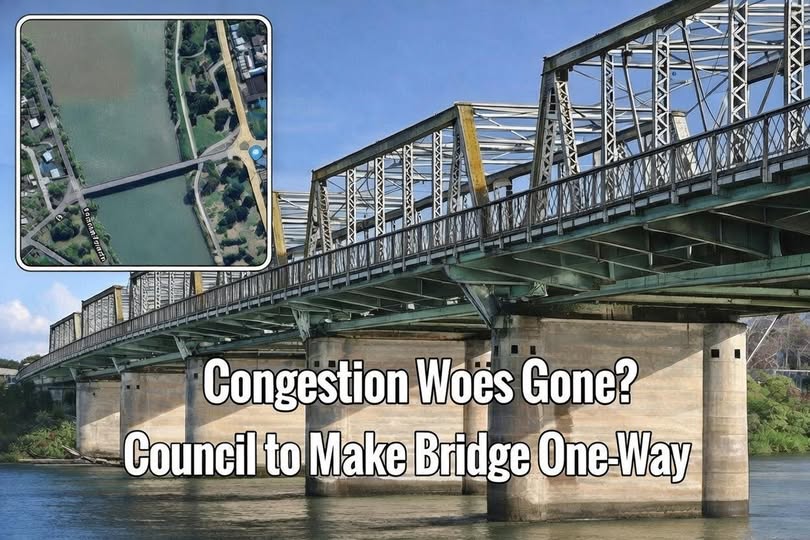
The Dublin Street Bridge is a key transport link in Whanganui, connecting the city centre with its eastern suburbs via Anzac Parade, part of State Highway 4. Any changes to its operation would be publicly communicated through official council channels.
The council has acknowledged that the bridge is nearing the end of its designed service life. A replacement has been identified as a long-term priority in the council’s Long-Term Plan 2024-2034, with an indicative cost of $69 million. The final price will depend on the option chosen.
A detailed business case is currently being developed, a process expected to cost about $2 million and take at least two years to complete.
The 309-metre through-truss bridge has served the Whanganui community for more than a century and includes separate walking and cycling paths on both sides. However, extended maintenance is now required, and carrying capacity has been downgraded following a structural assessment.
The bridge’s load limit has been reduced from Class 1, allowing 44-tonne vehicles, to six tonnes, significantly limiting its suitability for modern traffic and freight. A new bridge would be expected to be Class 1 rated, enabling heavy vehicles to avoid detours via the City Bridge and improving network resilience during emergencies.
Funding for a replacement would rely on collaboration with NZ Transport Agency Waka Kotahi (NZTA) and potentially other central government sources. Typically, NZTA funds about 62 percent of such projects, with the remaining 38 percent met by council, usually through borrowing to spread costs over time and limit rates impacts.
Because the bridge spans the Whanganui River, the council has said it is committed to placing the awa at the centre of the business case development, in line with the Te Awa Tupua (Whanganui River Claims Settlement) Act 2017. The council has been partnering with iwi and hapū and has introduced the project at a high level to hapū groups.
A Point of Entry business case has already been accepted by NZTA, and work is under way on feasibility and funding, with early stages focused on assessing the bridge’s current condition.
Awa FM – Te Reo Irirangi o Whanganui
For more of our people, our stories, our way, click News or follow us on Facebook.