By Moana Ellis, Local Democracy Reporting
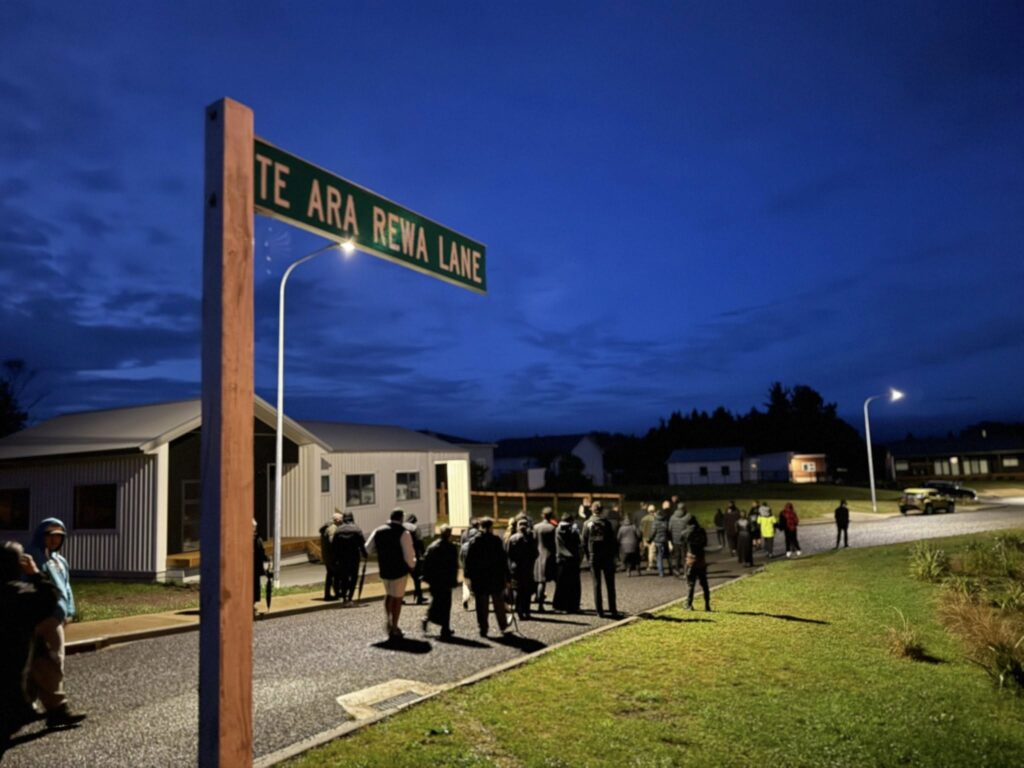
Ten Ngāti Rangi whānau will move into new homes in Ohakune this week following the opening of a 10-house development aimed at easing local housing pressure.
The project, known as Korokio, was led by Ngāti Rangi in partnership with Ka Uruora and supported by the Ministry of Housing and Urban Development.
It delivers three-bedroom, two-bathroom homes for iwi members, with rents set according to household income.
Kemp Dryden, chair of the iwi commercial entity Te Kūmete o Paerangi, said the development would provide immediate improvements in living conditions and long-term stability for whānau.
“A home is the foundation for whānau wellbeing. It means warm, dry bedrooms for tamariki, space and privacy for growing whānau, and stability,” Dryden said.
“For our people, it also means being able to live on our whenua, in our own community, connected to our whakapapa.”
Caregiver Racheal Brown will move into Korokio on Friday with her six-year-old daughter and her mother, who is 72.
She visited their new home for the first time on Tuesday.
“I’m excited, I’m scared, I’m happy. All of that,” Brown told Awa FM.
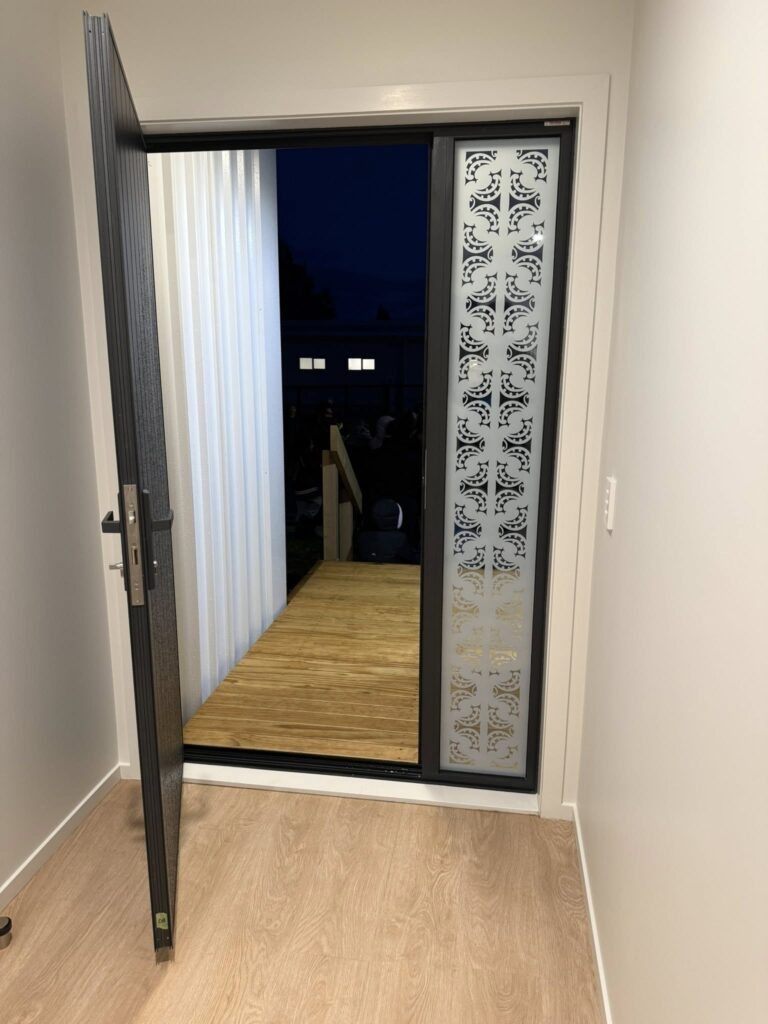
“It’s beautiful. It has three bedrooms, two bathrooms, a huge laundry and wet room, a kitchen/dining room and open-plan lounge, a washing machine, a dryer, fridge and dishwasher.
“It has heating – an air-conditioner and double-glazed windows. No heating was on but it was warm inside – even though it was snowing on the Desert Road.”
Brown said she has been living with her mother for the past five years. Her mother had lived in the same Housing New Zealand house for more than 30 years.
“It’s only two bedrooms, but we’ve had multiple people living here – up to seven adults and a couple of kids. Wherever we could find the space, that’s where we slept.
“We used the garage, and in winter time it was freezing. You’d come inside and have to sleep in the lounge. It was very cramped, very crowded.”
Another young mother shared her excitement about her new home.
“I’m excited to have a space for my baby and myself – a place to call home. We love that.”
One young mum was looking forward to moving in with her children after spending two years living with their great-grandmother and other whānau.
The homes were developed specifically for Ngāti Rangi uri in response to acute local housing pressures – an issue Dryden says remains unresolved.
“As an iwi, we are deeply concerned by the shortage of affordable housing for our whānau, within our own rohe. In 2024, we stepped up ourselves and funded four homes in Ohakune because our people could not wait.”
Dryden said government support had been critical.
“Continued government backing will be essential if more whānau are to access homes like these.”
Forced to leave
Ngā Waihua o Paerangi pou ārahi (chief executive) Helen Leahy said the development followed years of shifting policy settings that disrupted earlier housing plans.
“Over the last five years we have negotiated fit-for-purpose solutions with a range of agencies that included emergency housing, social housing, papakainga housing, worker accommodation and transitional housing.
“However, as government modified the policy levers, these opportunities were no longer available to us.”
Leahy said those shifts had tangible impacts on the community, with some whānau forced to leave the region.
Housing need in the rohe was “dire”, with whānau facing rents of $800 a week for a three-bedroom home.
“As a consequence, whānau are living in inadequate and insufficient housing. They are couch-surfing, they are living in cars, their health suffers.
“We carry those experiences with us into Korokio. It drives our determination to do better for our families,” Leahy said.
The development opened the door to a wide range of possibilities and potential, including the opportunity to establish a reo-speaking street, create a māra kai, introduce street karakia, or foster a culture of shared care.
“The opportunities are truly exciting,” Leahy said.
‘Korokio shows the power of iwi-led housing when the right partnerships and investment are in place.’
Ka Uruora partners with iwi across the country to deliver housing, supporting projects from planning through to completion. Chair Jamie Tuuta said the project demonstrated the effectiveness of iwi-led housing initiatives, while also underscoring the scale of unmet demand nationwide.
“Iwi know their people, they know their housing challenges, and they know what solutions will work. Korokio shows the power of iwi-led housing when the right partnerships and investment are in place.”
Tuuta said demand for warm, dry, affordable housing remained high across the country.
“Projects like Korokio prove what is possible – but they also remind us how much more could be achieved if iwi-led housing initiatives received sustained and adequate investment.”
After a whakanoa ceremony marking the opening last Sunday, Tomairangi Mareikura, chairwoman of Ngāti Rangi post-settlement governance entity Te Tōtarahoe o Paerangi, said she was excited for her iwi.
“Moments like today make you remember why we do this mahi for our whānau. Just seeing them well up, knowing that these kāinga are for them. They can see a future.”
Awa FM – Te Reo Irirangi o Whanganui
For more of our people, our stories, our way, click News or follow us on Facebook.