By Moana Ellis, Local Democracy Reporting
Nearly a century after the first classrooms opened, the former St George’s School site in Whanganui is set for a new life – this time as an iwi-led wellbeing hub.
Deconstruction at 125 Grey Street will clear the two-hectare site at the edge of Springvale Park for Hauora Māori agency Te Oranganui to establish a major new hauora (health) and oranga (wellbeing) centre for the wider community.
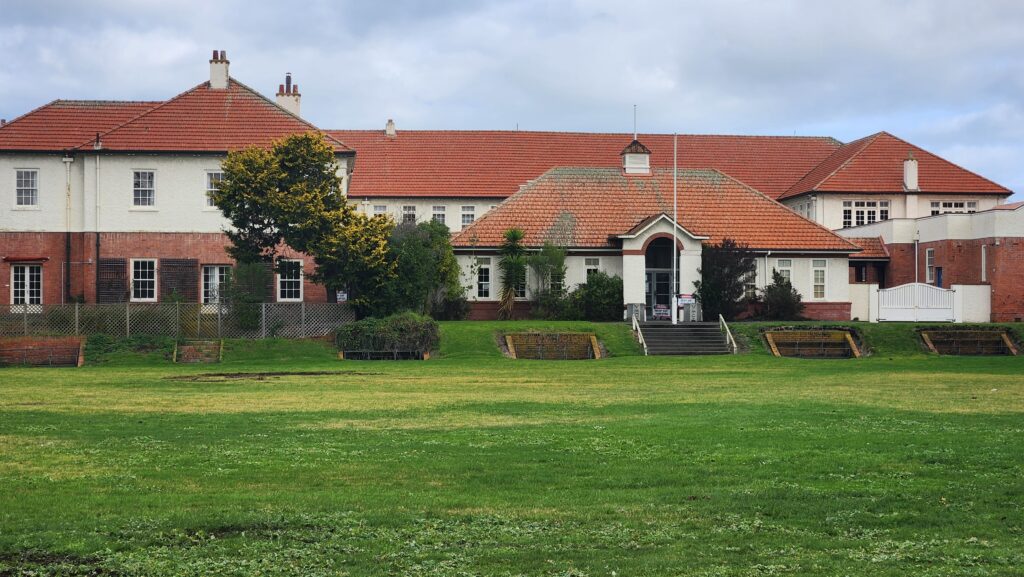
The buildings, dating back to 1927, held Class C heritage status in the district plan, with St George’s School operating on the site until 2011. The council’s Holdings company bought the property in 2019 to facilitate business opportunities that did not eventuate.
Once cleared, Whanganui District Council will lease the entire block to Te Oranganui, which is governed by representatives from four iwi: Ngaa Rauru, Tūpoho, Tamaūpoko and Ngā Wairiki-Ngāti Apa.
Te Oranganui mātaiwhetū (chief executive) Wheturangi Walsh-Tapiata said the move was driven by a long-held goal to bring the organisation together under one roof in a fit-for-purpose facility.
“We currently have three different sites,” Walsh-Tapiata told Awa FM.
“When we were looking at an opportunity to all be based in one space, to have our own buildings, that’s how we got to where we are today.”

The hub will centre on health with a preventative approach.
“We’ve already started looking at what a wellbeing hub would look like and therefore who are the people who we need to be having key conversations with who might want to be part of this kaupapa as well,” Walsh-Tapiata said.
“The hub will have a focus on preventative health, or keeping our people out of hospital.
“We’re looking to have connections and networks with others in that space to strengthen that positioning.”
Walsh-Tapiata said consultation had been ongoing, including with mana whenua and hapū connected to the site.
“We have brought architects and a project management team in. We have, wherever possible, attempted to consult with the iwi that are a part of our governing board.
“The particular whenua we eventually settled on also required some further conversations with, for example, the mana whenua, the hapū that are connected to that whenua. Those are ongoing conversations.”
She said Te Oranganui had been in conversation with Māori at Pūtiki and had had initial discussions with Tamareheroto, a hapū of Whanganui with connections to Ngaa Rauru.
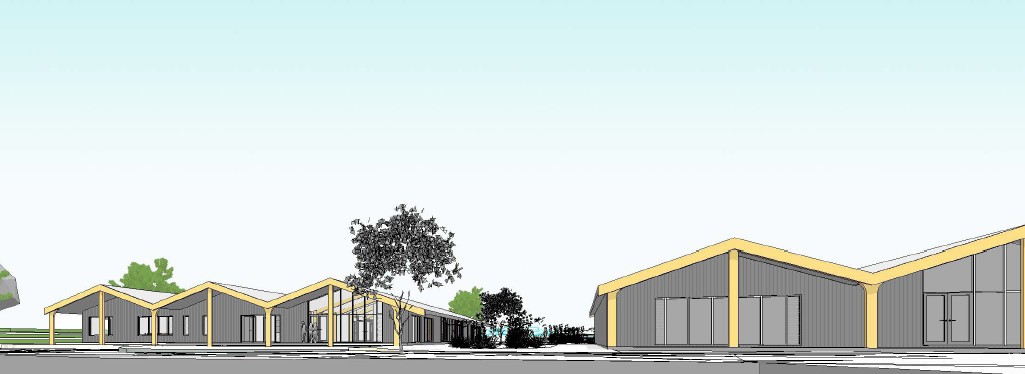
Award-winning architects Tennent Brown will design the development.
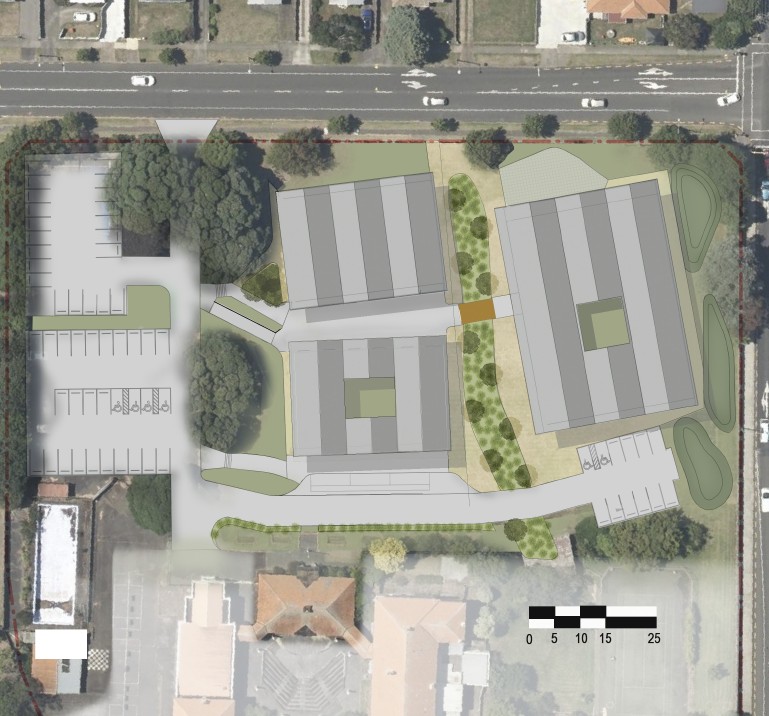
Three new buildings are planned on the current cricket ground. The existing administration and early childhood education (ECE) blocks will remain for now.
“We may not be able to build all three buildings at once and therefore having the admin building and the ECE building allows us a bit more opportunity to support our activities for a period of time.”
Deconstruction of the heritage building will be managed by the council and done in a way that allows materials to be reused.
The council said this week that salvaged bricks and timber (including rimu, mataī and tōtara) will be made available for public sale in May. Up to 95 percent of the building – an estimated 658 tonnes – will be offered for reuse.
‘I’d like to think that whatever we create on that whenua is reflective of our history and that when you come on, that’s what you feel – you feel at peace, you feel like the taiao intersects with everything that we’re doing in that place.’
A toi (artists and creators) group created by Te Oranganui will consider how some of the materials could be reused.
“We’re bringing the toi group in early because we want them to see the whole parcel of land, the entirety of the structures, and to ask them what might be their contribution in that space.
“There’s some beautiful wood and even if we didn’t end up using it, wouldn’t it be lovely if our carvers could use it. Those are conversations that are still to be had.”
Walsh-Tapiata said the vision extended beyond bricks and mortar.
“I think our people are owed this. We should have opportunities to create something new and exciting which is reflective of us.
“A lot of the discussions we’ve had, for example with the Whanganui District Council, is that history didn’t just start when the settlers arrived – there’s a much, much longer history.
“I’d like to think that whatever we create on that whenua is reflective of our history and that when you come on, that’s what you feel – you feel at peace, you feel like the taiao (environment) intersects with everything that we’re doing in that place. That’s what we’re trying to create.”
Landscaping will form part of the new build, with a focus on indigenous planting and food-growing. Several ancient pōhutukawa trees will be retained at Te Oranganui’s request.
“We have people within the organisation who are strongly committed to things like maara kai (food gardens) and to ensuring that any planting that occurs on the site aligns with the history or the original purpose of that whenua – and that any planting is indigenous.”
Construction is expected to begin this year, with the major part of the build targeted for completion by the end of 2027.
The council has said the 21-year lease to Te Oranganui ensures the site remains in public ownership, provides ongoing income to the council, and reflects community feedback, iwi aspirations and heritage considerations.
Awa FM – Te Reo Irirangi o Whanganui
For more of our people, our stories, our way, click News or follow us on Facebook.