By Moana Ellis, Local Democracy Reporting
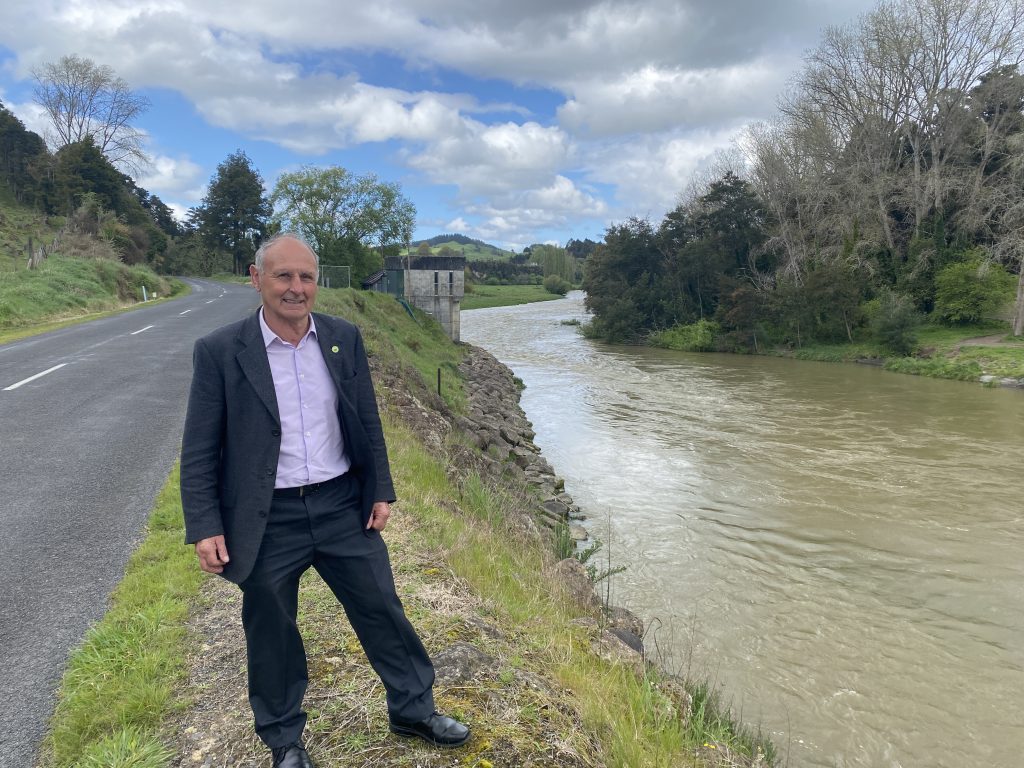
Ruapehu mayor Weston Kirton says the Government’s regional council overhaul will be welcomed by local communities – but only if the reforms genuinely reduce costs and boost efficiency.
“Local government wants and needs greater efficiencies and lower rates and if the reforms can deliver these outcomes they will be welcomed,” Kirton told Local Democracy Reporting.
The Government plans to replace elected regional councillors with mayoral-led panels.
Announcing the proposal on Tuesday, RMA Reform Minister Chris Bishop said local government is “tangled in duplication, disagreements, and decisions that defy common sense”.
The Minister said regional council roles will be reduced following Resource Management Act (RMA) reform.
Kirton believes territorial authorities can take on more work if properly resourced, but would require solid support.
He said many Ruapehu ratepayers saw Horizons Regional Council as remote, with rates which did not flow back to or benefit the district.
District and city mayors forming a Combined Territories Board (CTB) could help improve understanding of the functions of the regional council, and bring accountability back to a local level, with mayors speaking on both district and regional matters, he said.
Kirton, who first entered local government in 1986, is serving his second mayoral stint after holding the top job for two terms from 1995 to 2001.
In between, he served two terms as a Horizons regional councillor and was re-elected mayor in 2022.
He said there was no direct consultation with Ruapehu District Council before the proposal announcement, but the Government’s intentions were well signalled.
The plans require mayoral panels to design a reorganisational plan within two years of being established. Drawing lessons from water reform, this would be a chance to expand shared services and embed safeguards like affordability, Kirton said.
He rejected concerns that mayors lack the expertise to oversee regional functions such as freshwater management, environmental regulation and flood protection.
Unitary council mayors already held these responsibilities and district mayors oversee functions closely aligned with regional roles, he said.
“In all cases they are supported by staff who are subject matter experts who provide the necessary advice to make informed decisions.”
On environmental oversight of areas such as water quality, catchment management and biodiversity, Kirton said governance relies heavily on technical advice regardless of the structure.
“[Specialist staff] translate detailed scientific, regulatory, and operational information into clear advice, outline risks and opportunities, and recommend evidence-based options”.
The removal of elected regional councillors would not compromise democratic representation, he said. With good engagement and transparency, community voices could be heard.
“Having fewer elected representatives does not mean communities receive lesser representation. What matters is the quality of governance, the clarity of roles, and the strong support systems around elected members.”
Māori voices
The proposed reforms remove regional Māori seats, relying on mayors to represent both Māori and general roll communities.
Kirton believed formal Māori representation would provide “the strongest foundation for meaningful participation”.
“However, it is ultimately for iwi and hapū across the region to determine how they wish to organise and express that collective voice.”
Māori representation in Ruapehu was strong, with three Māori Ward councillors and a Māori councillor elected to a general ward seat, and Te Tiriti o Waitangi was a core pillar of the council’s strategic and operational framework.
“We have invested significantly in building genuine partnerships with iwi and hapū.”
These and similar arrangements in neighbouring districts ensured mayors had a direct understanding of iwi and hapū perspectives, he said.
With those partnerships protected, he was confident Māori voices would continue to be heard and influential.
Kirton was aware of concerns, particularly for smaller districts, about population-weighted voting but said voting rules had yet to be decided.
His preference: “There should be one vote per council – any advisory roles should be non-voting.”
Most councils in the Horizons region represent rural areas which share many priorities including land and water management, resilience, infrastructure investment and sustainable economic development, he said.
“This collective rural voice provides a natural balance to the interests of the larger urban centres.”
Kirton said he expected the mayoral panel model to foster collaboration and collective thinking.
“We have shared interests and shared challenges, and this interdependence will help ensure that decision-making reflects the needs of the whole region.”
Whanganui mayor Andrew Tripe said Whanganui District Council would review the proposal and prepare a submission when more information was available.
“I want to take some time to fully consider what has been proposed and will be discussing it with the other mayors across our region,” Tripe said.
“I am keen to ensure that whatever happens the local voice is not lost, that the cost burden won’t be detrimental to ratepayers and that any changes continue to support strong, effective local decision-making for our community.”
Horizons Regional Council chairwoman Nikki Riley said mayors were not elected to provide regional oversight on environmental regulation.
“Horizons councillors act as a strong voice for our communities and the environment, and stripping away this layer of governance could weaken local representation,” she told Local Democracy Reporting.
Awa FM – Te Reo Irirangi o Whanganui
For more of our people, our stories, our way, click News or follow us on Facebook.