By Moana Ellis, Local Democracy Reporting
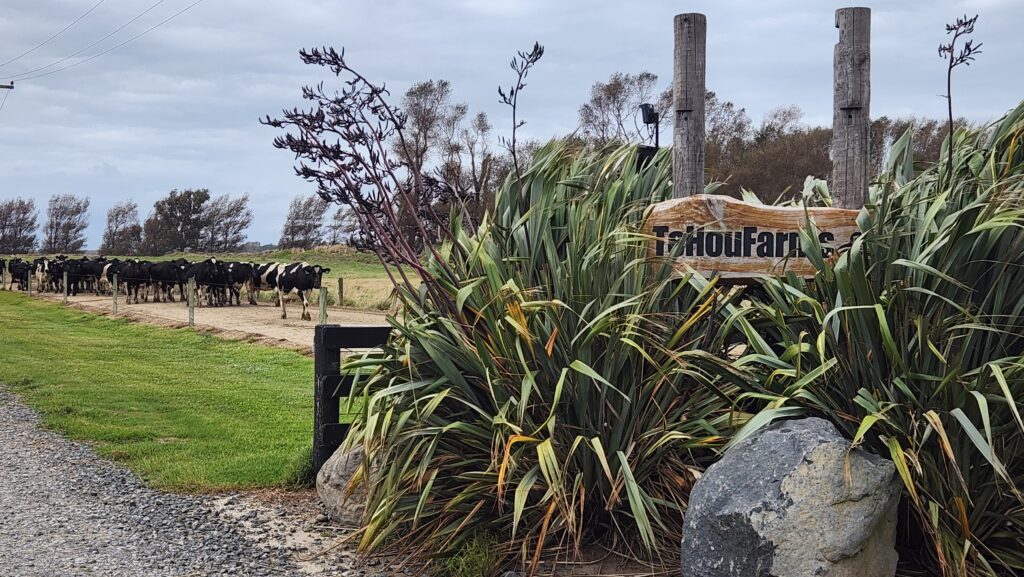
Māori-owned Te Hou Farms near Bulls is set to lift its dairy production by around 60 percent within three seasons.
A significant expansion of its dairy platform includes plans for a second milking shed and a larger herd.
The 1324-hectare agribusiness on Forest Road, west of Bulls, will boost output from 900,000 kilograms of milk solids (kgMS) last year to a forecast 960,000kgMS this year.
Next year (2026/2027), the farm will aim to hit a new forecast of 1.1 million kgMS and in 2027/28, the expanded dairy business will aim to produce 1.425 million kgMS.
Operations manager Jarred Clode said the farm’s board has approved a major shift in land use to drive that growth.
“The board approved a transition away from intensive cropping to putting on a second dairy shed and lifting the herd to 2500,” Clode said.
The plan includes expanding the dairy platform from 530 hectares to 760ha and installing a second 80-bail rotary milking system.
That would create two in-house dairy units – one milking 1500 cows and the other 1000.
At peak, the farm currently milks up to 1650 cows.
“We calve and winter milk 400 cows through the autumn. The remainder is spring seasonal,” Clode told Awa FM.
The strategy marks a clear shift toward consolidating dairy as the farm’s core driver of returns for its iwi shareholders, while stepping back from cropping and retaining forestry blocks. Surplus land could also be used for solar development.
“The balance of the farm will be in dairy support, a bit of beef progeny and the surplus land pockets will stay in trees,” Clode said.
“We’re looking at what we might do with the surplus areas – whether we put a solar farm and more forestry in. But there’ll be no more cropping. It’s too hard on the soil type here.”
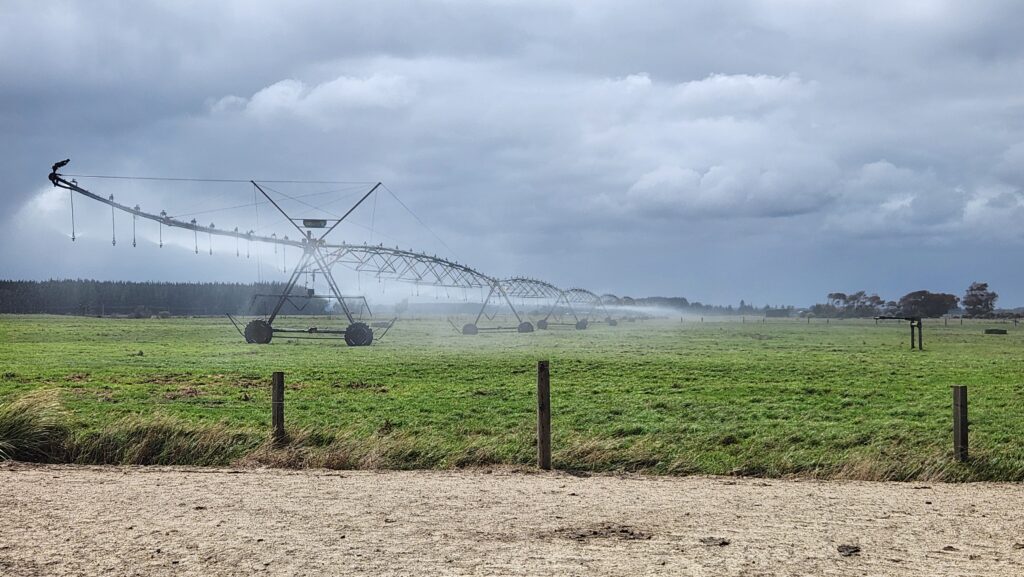
About 80 percent of the dairy platform is irrigated by centre pivot systems, with a further 340 hectares of the drystock farm also under irrigation.
“A lot of capital’s been spent putting these irrigators on, so it’s trying to get the best return on the investment for the shareholders.”
Te Hou Farms was formed in 2014 as a three-way partnership between Ngā Wairiki-Ngāti Apa Developments, Ātihau-Whanganui Incorporation and Waitatapia Station. In 2020, Waitatapia Station sold its one-third shareholding to the iwi.
Ngā Wairiki and Ngāti Apa are distinct but closely linked Rangitīkei/Manawatū iwi whose mana whenua stretches across predominantly rural farmland in the Rangitīkei and Whangaehu districts, from the coastline inland to Otairi.
Descendants of Paerangi, Turi and Apa-Hapai-Taketake, the iwi settled their Treaty claims in 2011 with an asset base of just under $30 million, which has since grown to $130m.
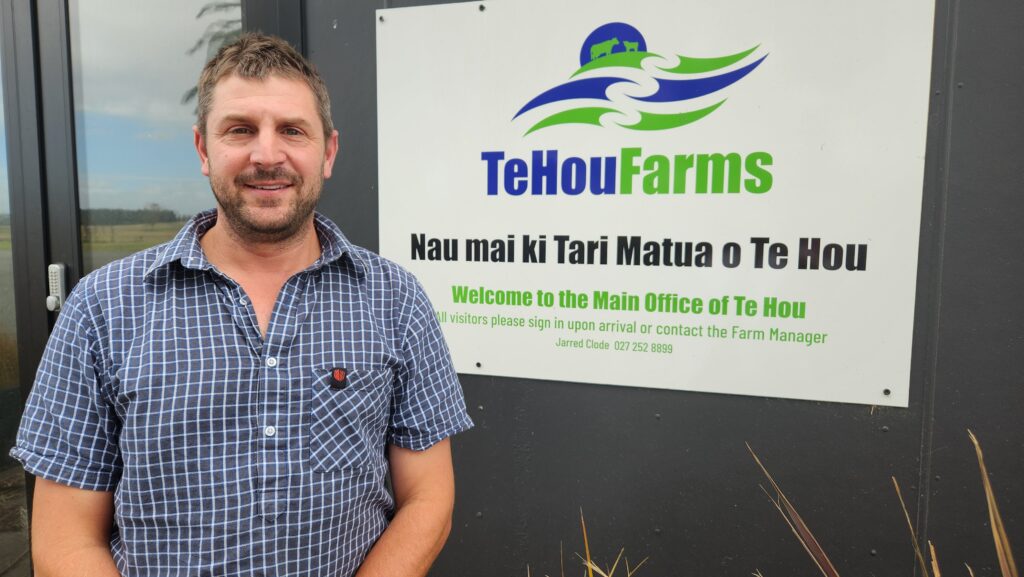
Clode joined Te Hou Farms in 2017 as a dairy unit manager and is now operations manager and business manager. He says the former Flock House AgResearch training farm has undergone significant development over the past decade, with the current balance of the property in dairy support, dry stock and cropping.
Te Hou Farms is part of the BakerAg Dairy System Monitoring (DSM) initiative, which benchmarks participating farms against comparable operations nationwide.
“Over the past two years the farm was in the top two percent of high-performing farms with its comparable 57 farms,” Clode said.
Awa FM – Te Reo Irirangi o Whanganui
For more of our people, our stories, our way, click News or follow us on Facebook.