By Moana Ellis, Local Democracy Reporting
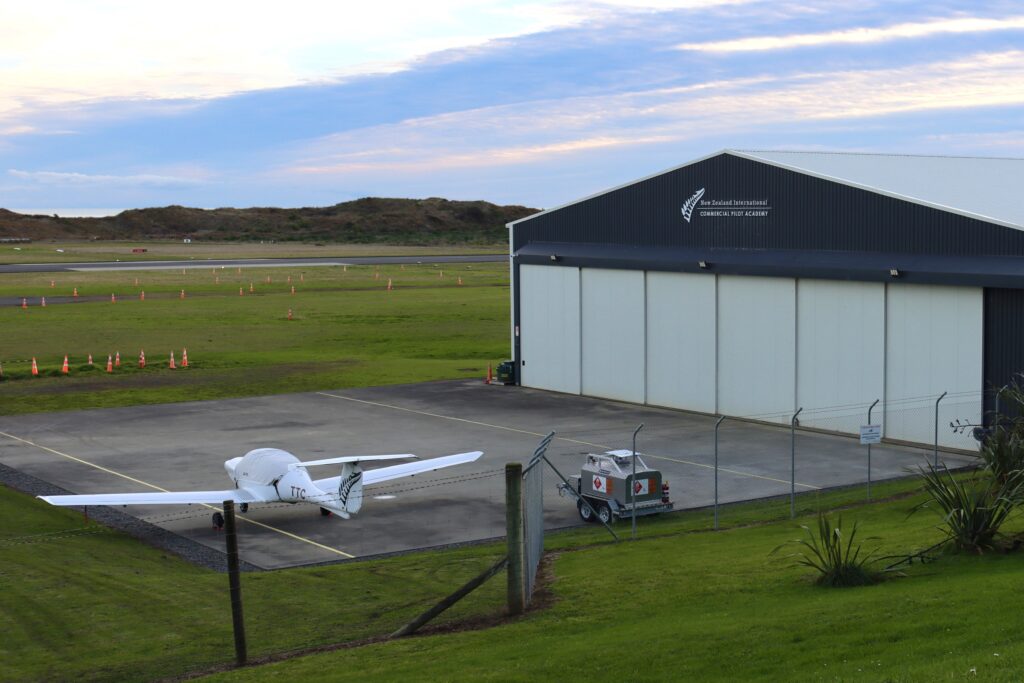
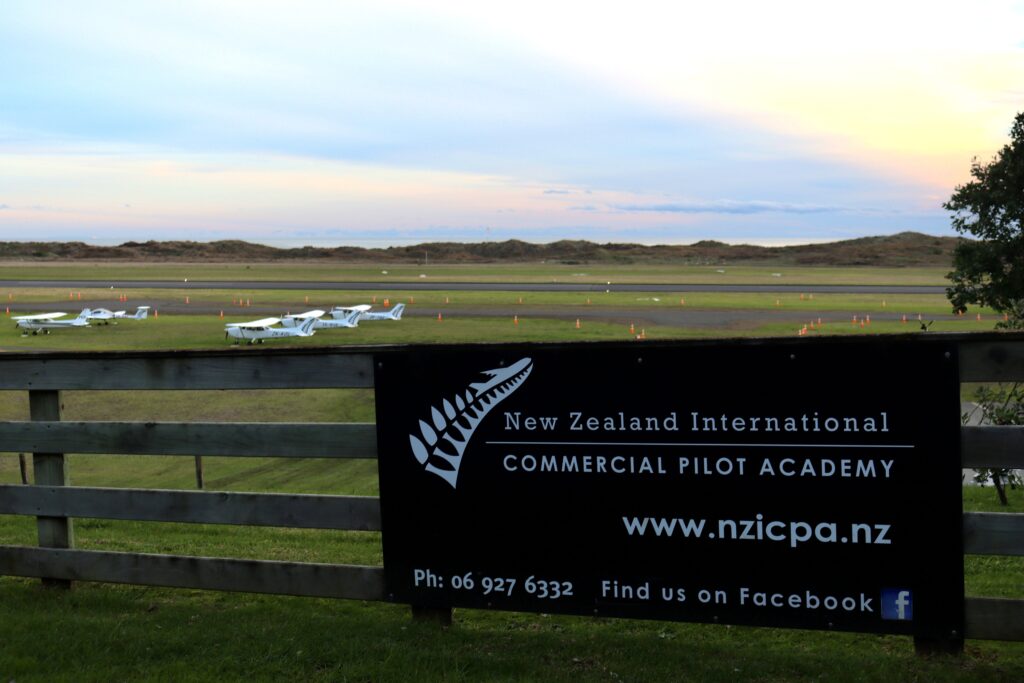
Whanganui District Council could face scrutiny over its decade-long investment in the troubled New Zealand International Commercial Pilot Academy (NZICPA) after a report highlighted the substantial loss for ratepayers.
“The estimated loss from the investment in NZICPA over the past 11 years and associated assets is $11m,” a report prepared by council staff says.
Mayor Andrew Tripe has backed a call for an independent review into the venture, saying the scale of the loss and public interest demand transparency and accountability.
“It’s appropriate that we take the time to independently review what happened over the last decade and identify what we can learn for the future,” Tripe said.
The report describes the loss as considerable.
It recommends councillors commission the review to examine key decisions made since the academy was established in 2015 and to guide governance of future council investments.
An independent review is expected to cost an unbudgeted $50,000 to $100,000.
The report, released ahead of a council-controlled organisations and economic growth committee meeting on Wednesday, outlines the academy’s history, from its creation to the wind-down of operations in 2025.
The report said the financial impact of the loss on rates was expected to be less than 1% in the 2026/27 financial year.
The final accumulated net cost depends on the value gained from the sale of remaining aircraft and simulators.
The academy was set up to stimulate local economic activity, create jobs, attract international students, and increase aviation activity at Whanganui Airport.
But it was hit by a series of setbacks, including international border closures during COVID-19, the withdrawal of Provincial Growth Fund support for a proposed Advanced Aviation Hub, the closure of a key building due to earthquake risk, and the temporary grounding of aircraft due to safety concerns by the Civil Aviation Authority in 2025.
Tripe said these challenges underlined the importance of examining what went wrong.
“What I can see is that an attempt to stimulate local economic activity got battered by successive external headwinds, so we need to think about how we could have managed those differently and learn from that,” Tripe said.
Council chief financial officer Mike Fermor acknowledged the financial hit but highlighted some benefits.
“While the direct financial cost to the council has been significant, the academy also delivered measurable economic benefits for Whanganui during its years of operation,” Fermor said.
Independent analysis cited in the report estimates the academy contributed about $9.8 million annually to the district’s GDP at its peak and supported roughly 96 full-time jobs.
Much of this benefit was linked to domestic and international students studying in Whanganui, spending on accommodation, living costs and visits by family members.
Still, the net loss to ratepayers and the handling of a multi-million-dollar public investment are likely to be the focus of intense scrutiny.
Tripe said releasing the report was a step toward transparency.
“While it did deliver economic benefits for our district during its years of operation, it also faced significant external challenges that changed its trajectory.
“This report helps explain the context in which decisions were made.”
The report says Covid-19 disrupted the pilot academy’s operations for several years.
Border closures introduced in early 2020 prevented international students from entering New Zealand.
“The ongoing lack of certainty began to place increasing pressure on both day-to-day operations and NZICPA’s finances,” the report said.
Before Covid-19, the council had approved investment intended to prepare the flight school for expected growth in student numbers.
These included buying aircraft, acquiring student accommodation and expanding training and simulation facilities.
As Covid-19 impacts continued, international student revenue could not be generated. Meanwhile, costs associated with earlier growth decisions continued to be incurred.
In 2020, Provincial Growth Fund support for the development of an Advanced Aviation Hub was withdrawn.
In mid-2021, the property at 125 Grey Street bought by the council was closed due to earthquake risk.
In 2024, the council was approached by an external party interested in purchasing the academy. Although the council was not actively seeking to sell, it agreed to explore the idea.
While this was happening, NZICPA’s aircraft were grounded by the CAA while compliance matters were reviewed. The grounding occurred at a time when NZICPA was only just beginning to emerge from the Covid-19 period, the report said.
“While some recovery had occurred, it was uneven and fragile and the business remained financially exposed and reliant on council support.”
The grounding interrupted recovery and re-introduced a high level of uncertainty and risk for the council.
“Council recognised that continuing to own and operate NZICPA carried ongoing regulatory, operational and financial risk, and that NZICPA continued to rely on financial support from council,” the report said.
The council agreed a lease arrangement with Ōamaru-based flight school New Zealand Aviation Academy Limited, which was looking to expand its aviation training operations, and moved to begin winding down the NZICPA.
The committee will consider the report and the recommendation to commission an independent review on March 18.
Awa FM – Te Reo Irirangi o Whanganui
For more of our people, our stories, our way, click News or follow us on Facebook.