By Moana Ellis, Local Democracy Reporting
Residents will have the chance to snap up pieces of Whanganui’s heritage when the district council starts selling salvaged materials from 125 Grey Street for community reuse.
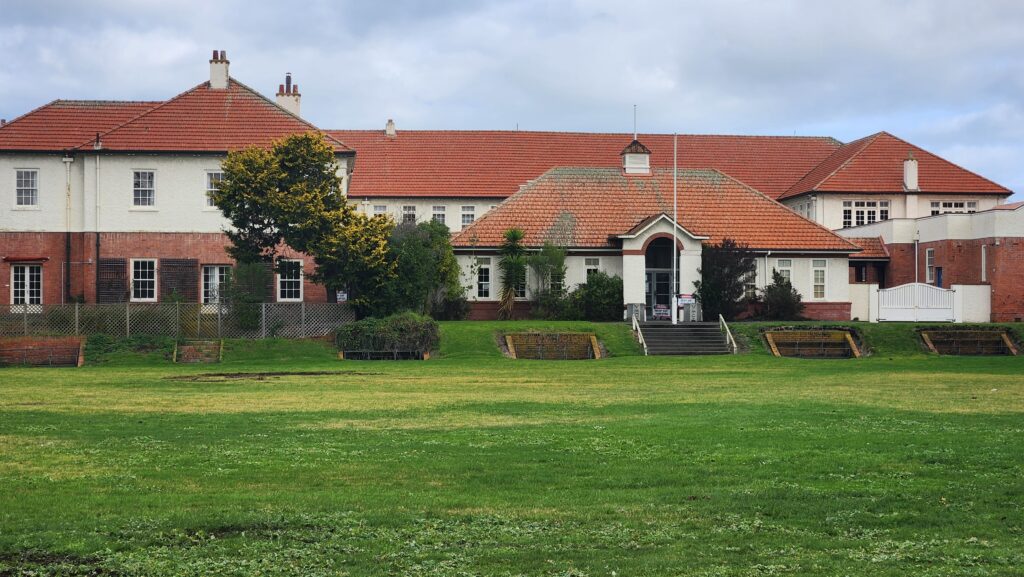
The historic former St George’s School site is being deconstructed to make way for an iwi-led wellbeing hub.
Buildings on the two-hectare site at the edge of Springvale Park, dating back to 1927, held Class C heritage status in the district plan, with St George’s School operating there until 2011.
From July, Hauora Māori agency Te Oranganui will lease the grounds from Whanganui District Council to establish a major new hauora and oranga centre for the wider community.
The deconstruction site will be open twice weekly from 9 April to 30 May – on Thursdays from 2pm to 4pm and Saturdays from 12pm to 2pm – allowing the public to inspect and buy a range of items recovered during the building’s deconstruction.
Available materials include bricks, timber and external windows for pre-order, alongside items ready for immediate purchase such as internal doors and windows, metal lockers, fireplace surrounds, desks, chairs, benches, sinks and fittings.
Prices will be marked, with staff onsite to assist buyers. Proceeds from all sales will return to council.
Council chief strategy officer Sarah O’Hagan said around 90-95 percent of the building’s materials, currently estimated at 658 tonnes, will be repurposed as part of the deconstruction.
“This means these materials will be reused in council projects and in homes and organisations across Whanganui, rather than going to waste,” she said.
The first phase of the project prioritised items with heritage or commemorative value for organisations connected to the site. These included St George’s School and Te Oranganui, the future leaseholder.
St George’s has received materials to build a commemorative walkway and pavilion, while Te Oranganui plans to incorporate timber into onsite developments.
“We’ve also repurposed a number of items in public spaces around Whanganui to benefit the community such as water fountains at Kowhai Park and Te Mana Park, benches from the auditorium at multiple park locations, adventure playground equipment at Te Mana Park, and restored gates at the Davis Library,” O’Hagan said.
“The next step is making the remaining materials available to the whole community for purchase.”
Among the historically significant materials are roof tiles believed to have arrived in New Zealand as ships’ ballast before being installed on the 1926 building, along with approximately 500,000 locally produced bricks from the Bastia Hill Brickworks – nearly a full year’s output at the time.
Heritage management firm Geometria is documenting the site’s history, with records of where salvaged materials are reused to be maintained for posterity.
Payments will be taken onsite via EFTPOS, by invoice, or at the council’s customer services on Guyton Street. All items are sold “as is”.
Awa FM – Te Reo Irirangi o Whanganui
For more of our people, our stories, our way, click News or follow us on Facebook.