By Moana Ellis, Local Democracy Reporting
Whanganui ratepayers may be frustrated with rising costs, but rates remain unavoidable if the district wants to keep investing in infrastructure and economic growth, Mayor Andrew Tripe says.
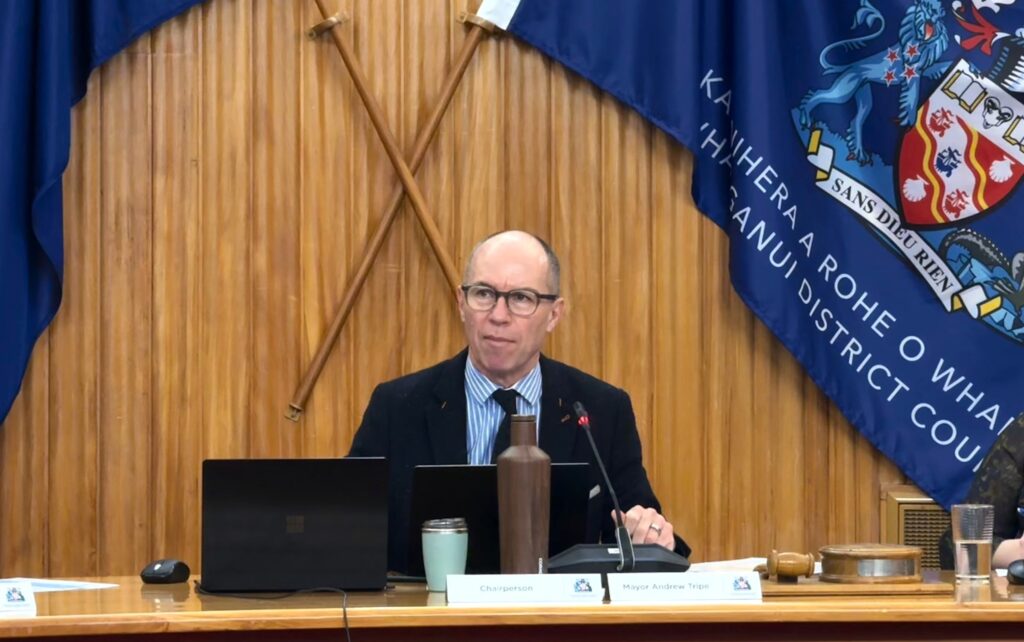
Addressing ratepayers during the Whanganui District Council’s first meeting of the year on Tuesday, Tripe described rates as a “blunt instrument” but said there was no realistic alternative funding source currently available to local government.
“We need income to keep our district moving forward, and at the moment it is rates and some non-rates revenue which allow us to do that. So let’s accept that and keep moving forward.”
Tripe’s comments came as the council adopted its governance manual for the 2025-28 triennium. He framed the document as a deliberate choice for long-term, financially disciplined leadership.
The manual was “more significant than it might sound”, setting the framework for long-term decision-making during a period of major change for local government.
Tripe said councils were facing some of the biggest reforms in decades, including changes to planning laws, water services delivery, infrastructure funding and potential rates capping.
“Councils everywhere are being asked to deliver more while keeping costs under control.”
Short-term thinking was no longer viable, he said, pointing to global economic pressure, ageing populations, workforce shortages and rising costs in health and superannuation.
“If communities want to thrive, they need clear direction, long-term planning and strong institutions.”
Whanganui could not assume the future would “take care of itself” and needed to be deliberate about economic growth, infrastructure investment and support for the next generation.
“People in a world of change want certainty and stability,” he said.
The governance manual, first introduced last term and now updated, was described by Tripe as a tool to clarify roles, strengthen accountability and keep council focused on long-term outcomes rather than reacting to short-term pressure.
It implements the mayor’s governance structure and establishes the terms of reference, quorums and delegated powers necessary for decision-making in the councils’ different committees and the Whanganui Rural Community Board.
It also includes the terms of reference for the District Licensing Committee, whose functions and powers are prescribed by the Sale and Supply of Alcohol Act 2012.
“Good governance doesn’t happen by accident,” Tripe said. “It’s something you build deliberately and keep improving.”
He said council’s challenge was balancing affordability with the need to prioritise core infrastructure, prepare for water reform, enable housing and economic growth, and keep rates as manageable as possible.
Periods of change brought uncertainty, he said, but also opportunity for districts that were well governed and forward-looking.
“Our role is to hold that steady course so the decisions we make today position Whanganui well for the future.”
Councillors Philippa Baker-Hogan and Peter Oskam opposed adopting the governance manual. Baker-Hogan said the public had elected 13 members to make council decisions, not a smaller group in committees.
Awa FM – Te Reo Irirangi o Whanganui
For more of our people, our stories, our way, click News or follow us on Facebook.