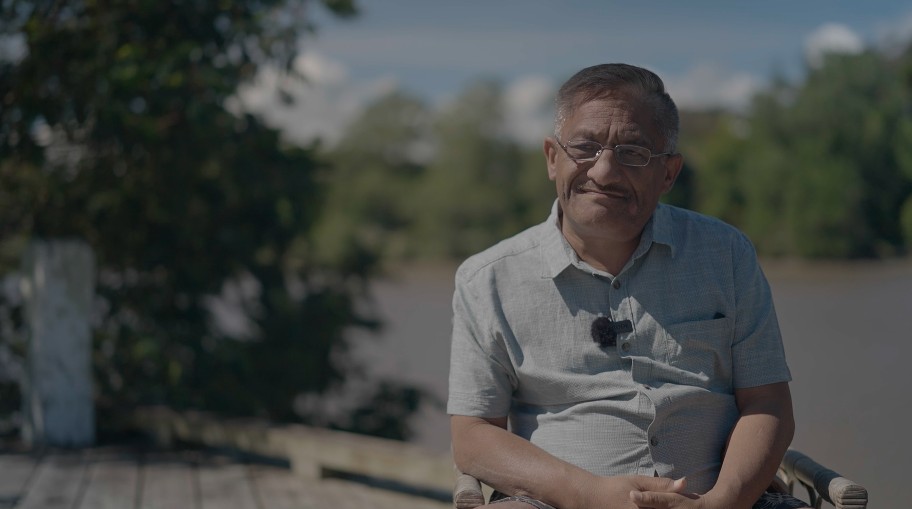
Te Ikamatawhero Rauru Broughton was the youngest son of Ngāti Ruanui tohunga Ruka Broughton Snr and kaikaranga Mereiwa Whakaruru, of Ngāti Awa and Kahungunu.
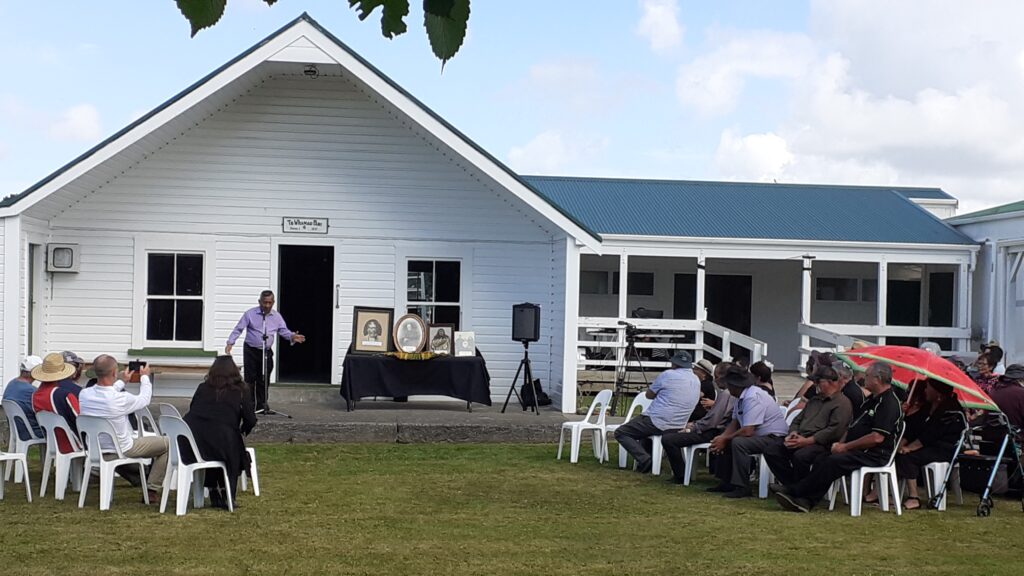
He was raised at Pākaraka at the knee of his grandmother, Ngāti Maika weaver Rēhia Bella Toherangi Whiu – from an early age, immersed in the knowledge, traditions and responsibilities of his people.
He was schooled in an ancient whare wānanga on the Whanganui River, receiving teachings that would shape his life as a custodian of knowledge.
Like his father before him, Rauru became a man his people could call upon.
He carried the responsibilities of marae, hapū and iwi with a deep sense of duty and generosity, sharing the knowledge entrusted to him and standing firmly in the tikanga and kawa of his people.
Raised speaking te reo Māori, he regarded the language as a pillar of his life and service.
For decades, he was a steadfast advocate for the reo, working to protect the dialects of the tribes of Te Tai Hau-ā-uru and Te Kāhui Maunga whānui.
His contribution went beyond preserving knowledge. He worked to keep it alive, ensuring the voices, teachings and ways of his ancestors continued to be heard, understood and carried forward.
Rauru died on Tuesday, 25 August 2026, following long illness. He was 52.
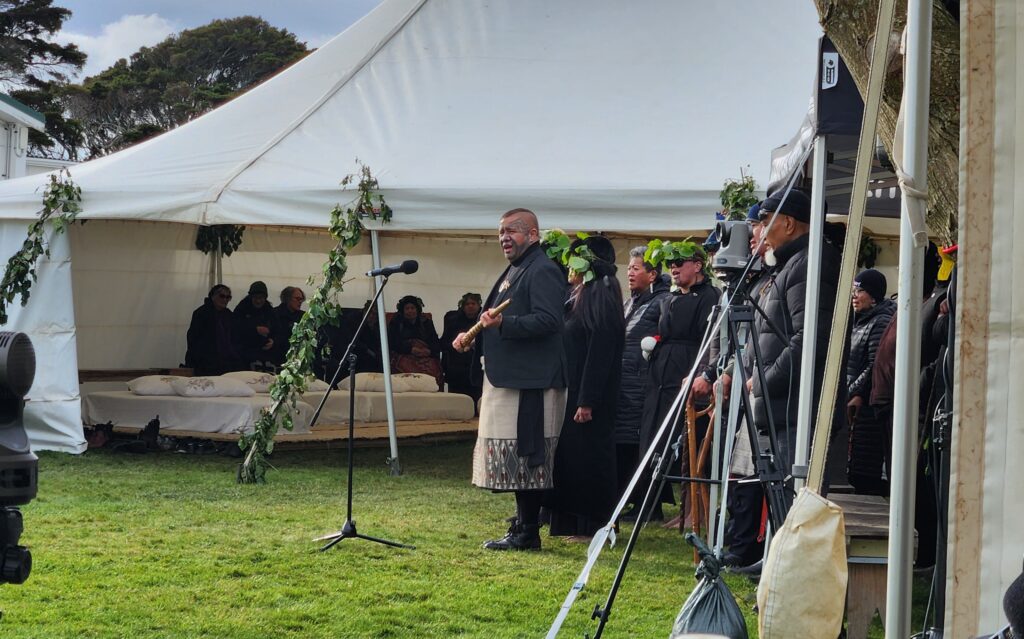
He was laid to rest at Pākaraka urupā on Sunday, 30 August.
Trina Taurua remembers her uncle as someone who never stopped showing up for his people.
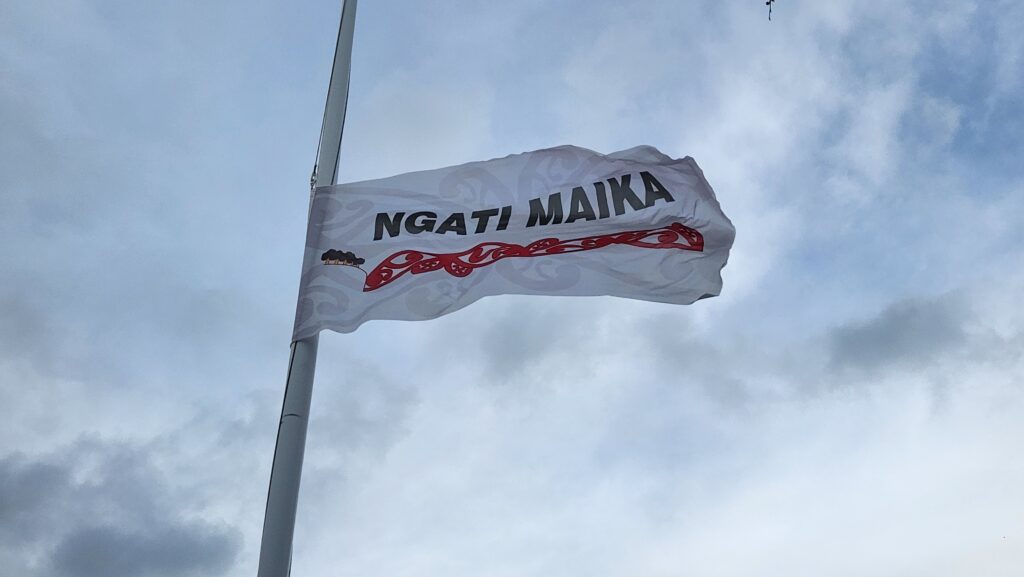
For their Ngā Rauru Kītahi hapū, Ngāti Maika, Rauru was an unwavering source of tautoko.
“I’ve known him most of my life. He was always there, from when he was little, with thick, thick glasses. Every kaupapa we had, we all met here at Pākaraka.
“He was always at the feet of his grandmother, Nanny Bella. He hung with the old people and had no English at all, only the reo.
“But he was always here to tautoko, no matter the kaupapa. He has always been here for us.”
Te Whare Wānanga o Upokotauaki
Rauru’s connections reached inland to Ruapehu maunga and the Mareikura whānau, who are Ngāti Maika through the Koroneho Pakatua line.
Rauru’s father was Anglican vicar in Raetihi for a time, and his older siblings Ruta, Ruka, Te Rapa and Rongopai were raised there.
Ruka senior would go on to become deeply involved in the movement to revitalise the whare wānanga of the rohe.
And so, although Rauru spent much of his childhood close to his Nanny Bella, the road between Pākaraka and Ruapehu was well travelled.
“He would come up home to Ohakune all the time,” Che Wilson says.
Che and Rauru are cousins through Che’s mother, but their relationship was also bound by the whare wānanga, the old people who surrounded it, and a shared inheritance of knowledge.
“There was a real closeness because of the whare wānanga and Uncle Ruka’s relationship with our last tohunga ahurewa Rangimotuhia Kātene, and all the olds: Uncle Matt Mareikura, Koro Mark Cribb, Uncle John Tahuparae, Aunty Joan [Akapita], Aunty Biddy [Mareikura].”
Che, Rauru and others became part of a new generation entrusted with the ancient teachings at Upokotauaki in Hiruharama.
Then came mau rākau training at Maungārongo Marae.
Later, the two cousins found themselves together again at Te Herenga Waka – Victoria University of Wellington – where Ruka senior had helped establish the marae alongside Hirini Moko Mead and others.
By then, they had accumulated a shared language of their own.
“We were cousins, we were close in age and we could talk a code from our time in the whare wānanga that nobody else could pick up on. It was our chance to let go and have fun.”
Even then, Rauru had an ear – and a particular gift – for the spoken word.
“The thing with Rauru is that he is just sharp – so sharp, and so comfortable playing with words.”
Che believes that gift was inherited.
He counts his Uncle Ruka’s Kāore Taku Raru, written shortly before his death in 1986, among his most treasured waiata.
“It’s an amazing, beautiful composition – the way he plays on words, evoking his emotions in his ill-health.
“Rauru inherited that stunning skill.
“And even though he was young, he left a hākari on the table for the generations to come.
“The gifts he left for Ngā Purapura o Te Taihauāuru and for Te Kāhui Maunga will be talked about and sung for years.”
Pioneer of iwi radio
Rauru was a pioneer of Māori broadcasting, beginning in radio before embracing the digital world to carry te reo and mātauranga to audiences far and wide.
As a teenager in 1991, he was a founding kaipāpāho at the first iwi Māori radio station in Te Tai Hau-ā-uru: Awa FM – Te Reo Irirangi o Whanganui. His broadcasting career would also take him to Te Korimako o Taranaki and Te Upoko o Te Ika.
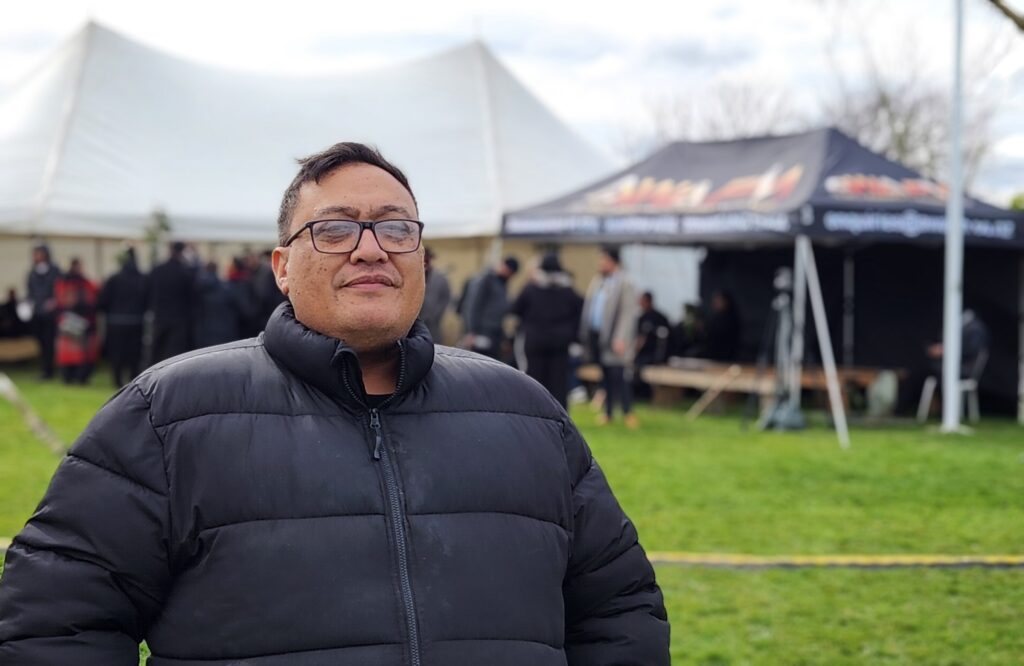
Eruera Rerekura was 15 and a student at St Augustine’s College in Whanganui when he first met Rauru.
“He was only a few years older than me, so Rauru and I were very close in those early times. Sometimes I would bunk school to sit in on his show.
“He did the 9 to 12 shift and sometimes he did mornings with Uncle Pate Haami.
“On Friday nights, I would end up at his place. Over the years, there have been some really pukukata moments. It wasn’t like a job. We were getting paid to make radio, but working with Rauru felt like we were just hanging out. That was how much fun we had.”
The two attended the opening of Te Korimako o Taranaki in 1992. About three months later, the late Huirangi Waikerepuru asked Rauru to host the new station’s breakfast show.
“I was just so amazed with Rauru, because back then there weren’t many native speakers under the age of 21 and to meet somebody whose first language was te reo Māori really amazed me,” Eru says.
“When I think about the standard of reo that I aspire to, and if there’s anybody I want to emulate, it’s Rauru Broughton. Like everybody, I’m going to miss him dearly.”
Rauru eventually moved south to Te Upoko o Te Ika in Pōneke, where he hosted a tandem show with Julian Wilcox, and during a break from broadcasting lectured in Mātauranga Māori at Te Wānanga o Raukawa in Ōtaki.
‘He could paint a picture in words’
He returned to Awa FM several times, in his final years creating the station’s flagship 100% te reo Māori programme Te Awa Kōrihi, centred on language, tikanga and iwi histories.
He maintained his connection with Te Korimako too, working as a te reo adviser and presenting the podcast Pupuke Te Wānanga, often alongside his daughter Aroha Broughton-Pue and expert guests.
Te Korimako kaiwhakahaere Tipene O’Brien regards Rauru as “the pinnacle broadcaster” of Te Tai Hau-ā-uru and across the motu.
“How privileged we were; how unique and special he was. There’s no other broadcaster I know of that calibre, not only in terms of the reo, but also the knowledge base and skill set he could draw on.
“He could paint a picture in words so that listeners could see the kaupapa he was talking about.
“He’s left all these jewels, all these taonga with Te Korimako, Awa FM and other stations. They are a legacy of resources for the future – for those who want to learn the skill of broadcasting, and for his mokopuna in time to come.”
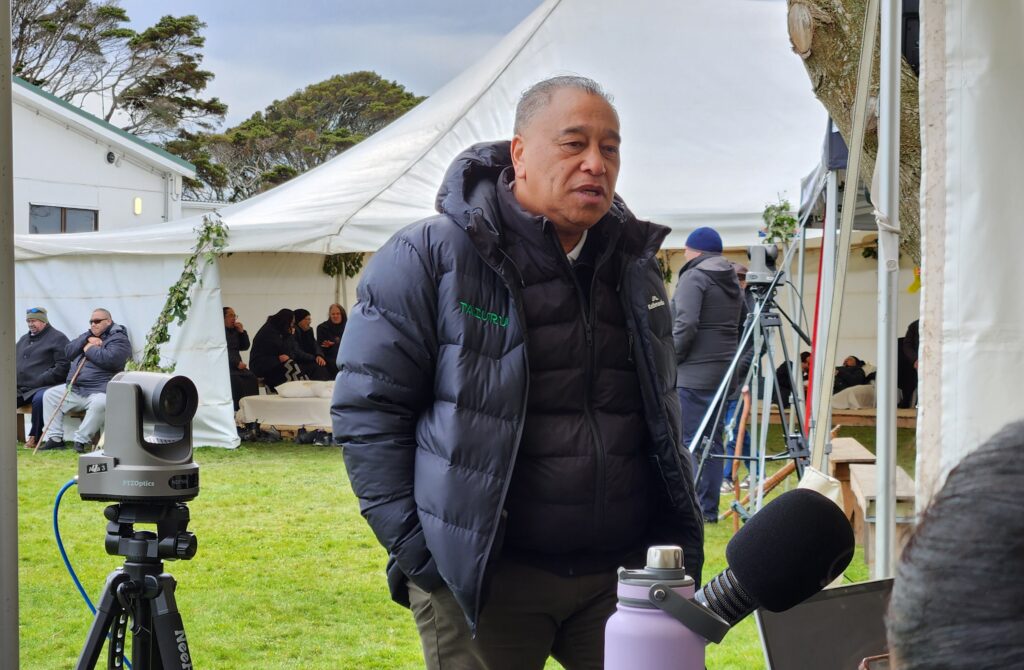
Rauru’s voice anchored countless national radio broadcasts and livestreams, reaching one of his biggest audiences as part of the coverage of Te Matatini o Te Kāhui Maunga in Ngāmotu in 2025.
He travelled with ngā reo irirangi as they moved into the digital age, embracing video, film, social media and podcasting along the way.
“He saw the opportunity to use technology to deliver content to a wider audience,” Tipene says.
“There were plenty of people looking for that kind of material, and he was willing to give what he had. That was Rauru.
“He was a teacher. He nurtured our young broadcasters. He was very humble.
“He was a unique person, probably irreplaceable, and integral to Awa FM, Te Korimako, Te Reo o te Uru and Taiuru News. We will never have another Rauru, and that’s the challenge for us now.”
Te Pou Tikanga o Te Kāhui Maunga
Rauru’s influence extended well beyond broadcasting.
In 2025, a massed poi pōwhiri composed by Rauru was performed by the hosts of Te Matatini o Te Kāhui Maunga.
Rauru served as Pou Tikanga of Te Kāhui Maunga, guiding the work to uphold the tikanga of the wider rohe.
“Te Kāhui Maunga represents kapa haka of Taranaki, Whanganui and Rātana and he had connections to all three of those areas,” says Elijah Pue, chair of Te Kāhui Maunga Society.
“As he said: Ko Taranaki te maunga, ko Whanganui te awa – and he ensured that the tikanga upheld represented the whole of Te Kāhui Maunga.”
His commitment to traditional Māori performing arts is reflected in a substantial body of composition.
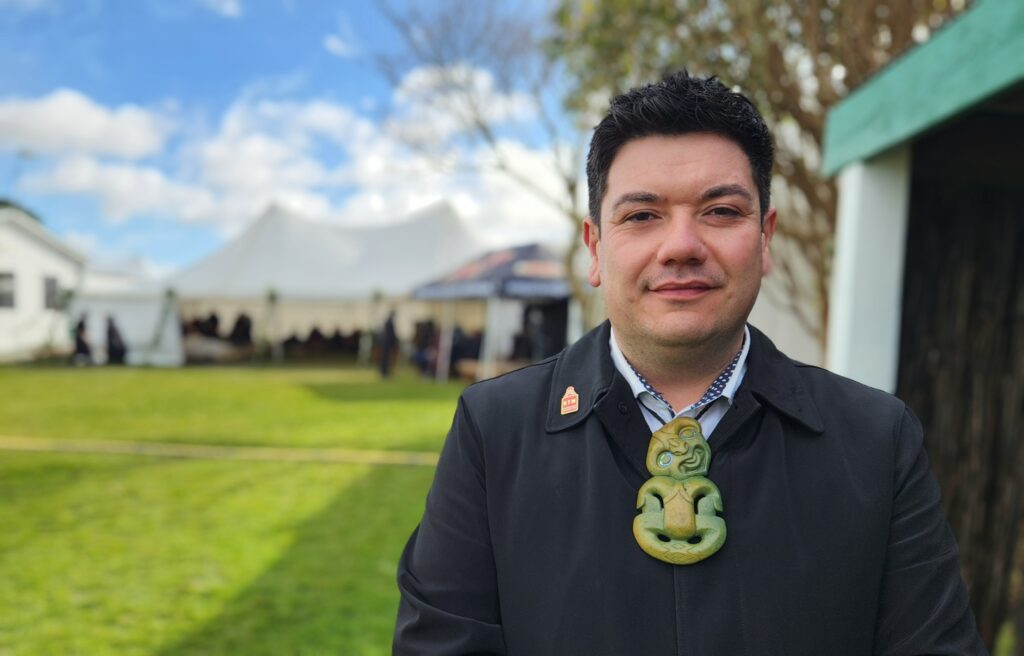
“The gravity of the loss of his contribution will be felt for generations. But what Papa Rauru has left behind for all of us will ensure his memory lives on,” Elijah says.
“We will sing his waiata and uphold the tikanga he taught us – and ensure all of that is passed down to the next generation.
“That is the taonga of Rauru that will never be forgotten.”
In May 2026, Rauru’s service to te reo Māori was recognised at Te Matoe o Te Reo, the Te Mātāwai language symposium in Ngāmotu.
‘How lucky we are’
For his colleagues at Awa FM, his absence is keenly felt.
Kaiwhakahaere Racquel McKenzie says Rauru will be sorely missed.
“When we first heard the news, I felt sorry for us as a people. Ko ngā kupu i puta he iwi pōhara.
“Papa Rauru was a mātanga reo broadcaster, an eloquent speaker of te reo o Whanganui and so special to us. There’s no one like him. He was kind and considerate, and he will leave such a gap in our daily lives.
“But as the days have gone on, I can’t help but think how lucky we are, how richer we are for his existence and everything he shared with us – for the legacy he left, for how giving he was of himself, his knowledge, his time and energy.
“And how grateful we are for the time we got to spend with him.”
Moe mai rā, e te Rangatira.